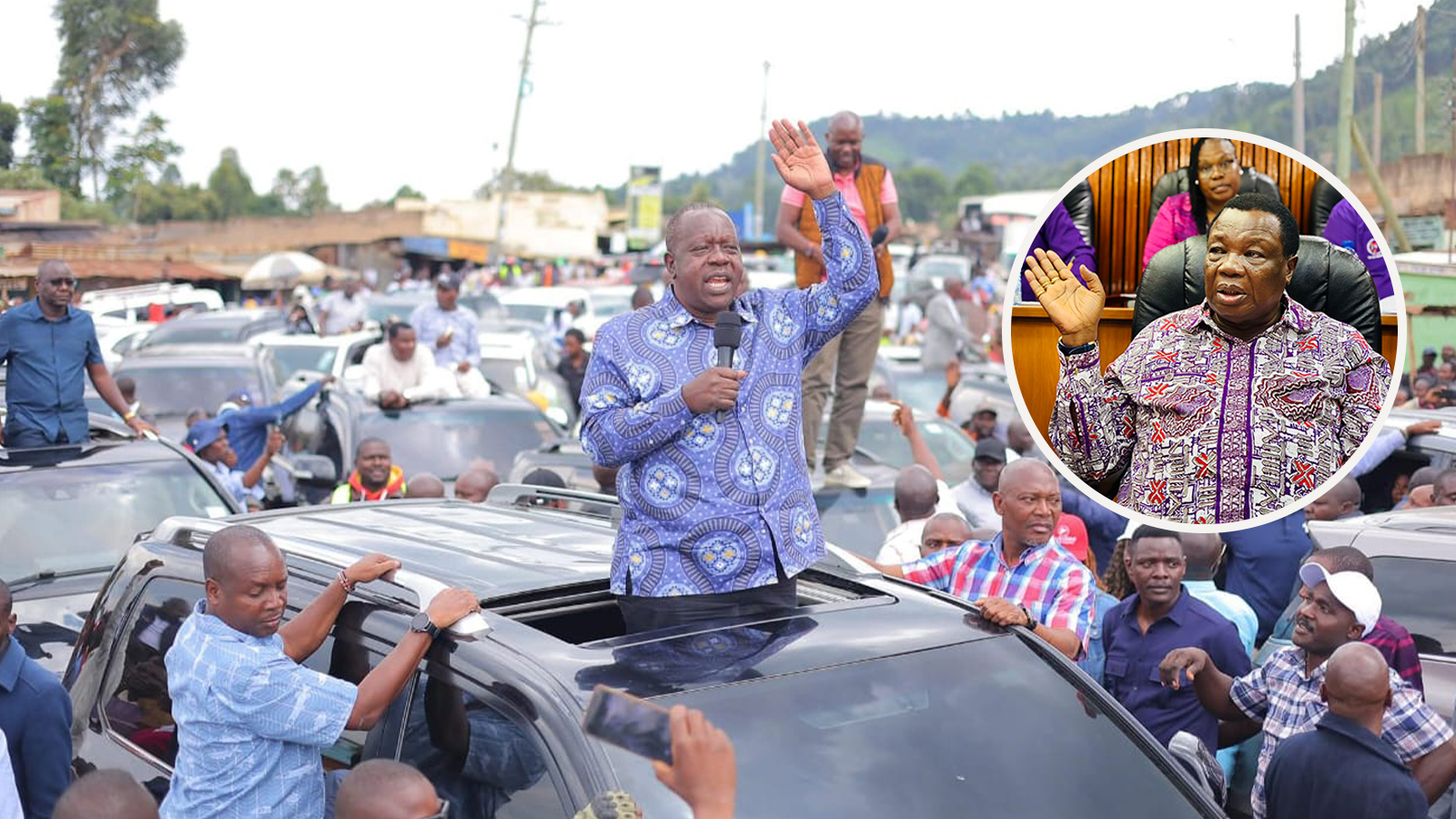
Atwoli, a longtime fixture in Kenyan politics known for his outspoken style and shifting allegiances, used the interview to dissect the dynamics of the upcoming polls, which are already shaping up as a high-stakes contest.
“Even if Uhuru Kenyatta vies for the presidency again in 2027, he will not defeat William Ruto,” Atwoli declared, emphasising Ruto’s entrenched position. He went further, directly addressing Matiang’i’s ambitions: “Fred Matiang’i should be careful; Uhuru never made Raila president, so how can he make Matiang’i president?”
Matiang’i, who served as a powerful enforcer in Kenyatta’s government from 2018 to 2022, has been ramping up his political activities in recent months. In a December interview with NTV Kenya, he outlined his vision for 2027, emphasising anti-corruption measures, economic reforms, and national unity.
However, his past role in controversial security operations, including crackdowns on protests and enforcement of stringent policies during the COVID-19 pandemic, has drawn scrutiny from critics who question whether it could alienate voters.
Atwoli, in his JKL remarks, portrayed Matiang’i not as a leader but as “best suited to be an enforcer,” suggesting his strengths lie in administration rather than electoral politics.
The labor leader’s comments extended beyond Matiang’i to a broader critique of the opposition’s readiness for 2027. Atwoli blamed Kenyatta for Raila Odinga’s narrow defeat in the 2022 elections, citing “weak campaign coordination” and a lack of active involvement from the then-incumbent president. “Uhuru appeared to be supporting Raila Odinga for the presidency, but at no point did he convene a meeting with the people who were on the frontline campaigning for Raila,” Atwoli said.
He argued that Kenyatta’s public endorsements were superficial, contributing to Odinga’s loss to Ruto by a margin of less than 1% in a fiercely contested race that went to Kenya’s Supreme Court.
He declared that “there’s no opposition in Kenya after Raila Odinga,” referring to the veteran politician’s recent shift toward continental roles, including his bid for the African Union Commission chairperson.
Atwoli also took aim at other figures: He called retired Chief Justice David Maraga “an old man who lives in his own world,” dismissed Trans Nzoia Governor George Natembeya as “a problem to himself,” and suggested Narc-Kenya leader Martha Karua should “remain an agitator” rather than pursue higher office.
Despite the pessimism toward individual candidates, Atwoli expressed optimism about the Orange Democratic Movement (ODM), Odinga’s party, insisting it could “regroup and survive post-Raila.”
He stressed the importance of unity within ODM amid growing internal divisions and succession battles, warning that fragmented opposition efforts could hand Ruto an easy victory. In earlier statements, Atwoli has emphasised the role of regional strongholds, particularly warning opposition leaders that “you can’t win Western [Kenya] without us,” referring to labor and community support in the region.
Atwoli, a longtime fixture in Kenyan politics known for his outspoken style and shifting allegiances, used the interview to dissect the dynamics of the upcoming polls, which are already shaping up as a high-stakes contest.
“Even if Uhuru Kenyatta vies for the presidency again in 2027, he will not defeat William Ruto,” Atwoli declared, emphasising Ruto’s entrenched position. He went further, directly addressing Matiang’i’s ambitions: “Fred Matiang’i should be careful; Uhuru never made Raila president, so how can he make Matiang’i president?”
Matiang’i, who served as a powerful enforcer in Kenyatta’s government from 2018 to 2022, has been ramping up his political activities in recent months. In a December interview with NTV Kenya, he outlined his vision for 2027, emphasising anti-corruption measures, economic reforms, and national unity.
However, his past role in controversial security operations, including crackdowns on protests and enforcement of stringent policies during the COVID-19 pandemic, has drawn scrutiny from critics who question whether it could alienate voters.
Atwoli, in his JKL remarks, portrayed Matiang’i not as a leader but as “best suited to be an enforcer,” suggesting his strengths lie in administration rather than electoral politics.
The labor leader’s comments extended beyond Matiang’i to a broader critique of the opposition’s readiness for 2027. Atwoli blamed Kenyatta for Raila Odinga’s narrow defeat in the 2022 elections, citing “weak campaign coordination” and a lack of active involvement from the then-incumbent president. “Uhuru appeared to be supporting Raila Odinga for the presidency, but at no point did he convene a meeting with the people who were on the frontline campaigning for Raila,” Atwoli said.
He argued that Kenyatta’s public endorsements were superficial, contributing to Odinga’s loss to Ruto by a margin of less than 1% in a fiercely contested race that went to Kenya’s Supreme Court.
He declared that “there’s no opposition in Kenya after Raila Odinga,” referring to the veteran politician’s recent shift toward continental roles, including his bid for the African Union Commission chairperson.
Atwoli also took aim at other figures: He called retired Chief Justice David Maraga “an old man who lives in his own world,” dismissed Trans Nzoia Governor George Natembeya as “a problem to himself,” and suggested Narc-Kenya leader Martha Karua should “remain an agitator” rather than pursue higher office.
Despite the pessimism toward individual candidates, Atwoli expressed optimism about the Orange Democratic Movement (ODM), Odinga’s party, insisting it could “regroup and survive post-Raila.”
He stressed the importance of unity within ODM amid growing internal divisions and succession battles, warning that fragmented opposition efforts could hand Ruto an easy victory. In earlier statements, Atwoli has emphasised the role of regional strongholds, particularly warning opposition leaders that “you can’t win Western [Kenya] without us,” referring to labor and community support in the region.
Atwoli, a longtime fixture in Kenyan politics known for his outspoken style and shifting allegiances, used the interview to dissect the dynamics of the upcoming polls, which are already shaping up as a high-stakes contest.
“Even if Uhuru Kenyatta vies for the presidency again in 2027, he will not defeat William Ruto,” Atwoli declared, emphasising Ruto’s entrenched position. He went further, directly addressing Matiang’i’s ambitions: “Fred Matiang’i should be careful; Uhuru never made Raila president, so how can he make Matiang’i president?”
Matiang’i, who served as a powerful enforcer in Kenyatta’s government from 2018 to 2022, has been ramping up his political activities in recent months. In a December interview with NTV Kenya, he outlined his vision for 2027, emphasising anti-corruption measures, economic reforms, and national unity.
However, his past role in controversial security operations, including crackdowns on protests and enforcement of stringent policies during the COVID-19 pandemic, has drawn scrutiny from critics who question whether it could alienate voters.
Atwoli, in his JKL remarks, portrayed Matiang’i not as a leader but as “best suited to be an enforcer,” suggesting his strengths lie in administration rather than electoral politics.
The labor leader’s comments extended beyond Matiang’i to a broader critique of the opposition’s readiness for 2027. Atwoli blamed Kenyatta for Raila Odinga’s narrow defeat in the 2022 elections, citing “weak campaign coordination” and a lack of active involvement from the then-incumbent president. “Uhuru appeared to be supporting Raila Odinga for the presidency, but at no point did he convene a meeting with the people who were on the frontline campaigning for Raila,” Atwoli said.
He argued that Kenyatta’s public endorsements were superficial, contributing to Odinga’s loss to Ruto by a margin of less than 1% in a fiercely contested race that went to Kenya’s Supreme Court.
He declared that “there’s no opposition in Kenya after Raila Odinga,” referring to the veteran politician’s recent shift toward continental roles, including his bid for the African Union Commission chairperson.
Atwoli also took aim at other figures: He called retired Chief Justice David Maraga “an old man who lives in his own world,” dismissed Trans Nzoia Governor George Natembeya as “a problem to himself,” and suggested Narc-Kenya leader Martha Karua should “remain an agitator” rather than pursue higher office.
Despite the pessimism toward individual candidates, Atwoli expressed optimism about the Orange Democratic Movement (ODM), Odinga’s party, insisting it could “regroup and survive post-Raila.”
He stressed the importance of unity within ODM amid growing internal divisions and succession battles, warning that fragmented opposition efforts could hand Ruto an easy victory. In earlier statements, Atwoli has emphasised the role of regional strongholds, particularly warning opposition leaders that “you can’t win Western [Kenya] without us,” referring to labor and community support in the region.
Atwoli, a longtime fixture in Kenyan politics known for his outspoken style and shifting allegiances, used the interview to dissect the dynamics of the upcoming polls, which are already shaping up as a high-stakes contest.
“Even if Uhuru Kenyatta vies for the presidency again in 2027, he will not defeat William Ruto,” Atwoli declared, emphasising Ruto’s entrenched position. He went further, directly addressing Matiang’i’s ambitions: “Fred Matiang’i should be careful; Uhuru never made Raila president, so how can he make Matiang’i president?”
Matiang’i, who served as a powerful enforcer in Kenyatta’s government from 2018 to 2022, has been ramping up his political activities in recent months. In a December interview with NTV Kenya, he outlined his vision for 2027, emphasising anti-corruption measures, economic reforms, and national unity.
However, his past role in controversial security operations, including crackdowns on protests and enforcement of stringent policies during the COVID-19 pandemic, has drawn scrutiny from critics who question whether it could alienate voters.
Atwoli, in his JKL remarks, portrayed Matiang’i not as a leader but as “best suited to be an enforcer,” suggesting his strengths lie in administration rather than electoral politics.
The labor leader’s comments extended beyond Matiang’i to a broader critique of the opposition’s readiness for 2027. Atwoli blamed Kenyatta for Raila Odinga’s narrow defeat in the 2022 elections, citing “weak campaign coordination” and a lack of active involvement from the then-incumbent president. “Uhuru appeared to be supporting Raila Odinga for the presidency, but at no point did he convene a meeting with the people who were on the frontline campaigning for Raila,” Atwoli said.
He argued that Kenyatta’s public endorsements were superficial, contributing to Odinga’s loss to Ruto by a margin of less than 1% in a fiercely contested race that went to Kenya’s Supreme Court.
He declared that “there’s no opposition in Kenya after Raila Odinga,” referring to the veteran politician’s recent shift toward continental roles, including his bid for the African Union Commission chairperson.
Atwoli also took aim at other figures: He called retired Chief Justice David Maraga “an old man who lives in his own world,” dismissed Trans Nzoia Governor George Natembeya as “a problem to himself,” and suggested Narc-Kenya leader Martha Karua should “remain an agitator” rather than pursue higher office.
Despite the pessimism toward individual candidates, Atwoli expressed optimism about the Orange Democratic Movement (ODM), Odinga’s party, insisting it could “regroup and survive post-Raila.”
He stressed the importance of unity within ODM amid growing internal divisions and succession battles, warning that fragmented opposition efforts could hand Ruto an easy victory. In earlier statements, Atwoli has emphasised the role of regional strongholds, particularly warning opposition leaders that “you can’t win Western [Kenya] without us,” referring to labor and community support in the region.

We bring you the latest news from the larger Gusii region and beyond.